Essential Camping Gear for a Comfortable Trip in 2026
Published Jul 21, 2026

Essential Camping Gear for a Comfortable Trip in 2026
Whether you are planning a first overnight at a nearby campground or a full weekend at a state park, the right gear makes the difference between a trip worth repeating and one that puts you off camping altogether. You do not need a huge inventory of equipment to camp comfortably — just a handful of reliable pieces that cover shelter, hydration, light, and, for anyone who likes data, a way to track activity on the trail.
Below is a practical rundown of gear worth considering for 2026, based on real specs and documented pros and cons rather than marketing copy.
Shelter: Start With a Tent That Sets Up in Minutes
A common mistake among new campers is choosing a tent based on capacity rating alone. A tent marketed for four people usually fits two to three adults comfortably once gear is factored in, so it often pays to size up for extra room.
Price as of Jul 20, 2026 — subject to change. See current price on Amazon.
The Coleman Sundome is a solid entry point for first-time and occasional campers. It uses a simple freestanding pole design that sets up in about 10 minutes, even solo, and its welded, bathtub-style floor helps resist water seepage from underneath — a common failure point in budget tents. Ventilation comes from a ground-level vent plus mesh paneling, which helps reduce condensation on cool nights.
Worth knowing before buying: the rainfly covers only the roof, so wind-driven rain can still reach the lower tent body, and the fiberglass poles can bow under strong gusts. For calm-weather car camping, though, it remains a dependable, budget-friendly option.
Hydration: Keep Water Accessible Without Breaking Stride
Stopping every twenty minutes to dig a water bottle out of a pack gets old fast, especially on hikes with any real elevation change.
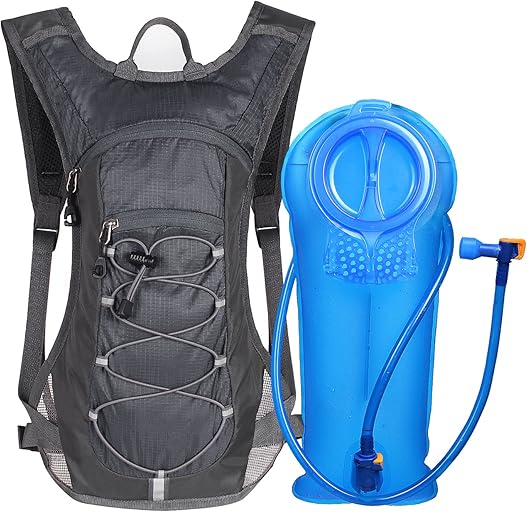
Price as of Jul 20, 2026 — subject to change. See current price on Amazon.
The Unigear Hydration Pack solves this with a built-in bladder compartment that keeps water accessible hands-free, so hikers can sip on the move instead of stopping. It is lightweight and includes multiple storage compartments for snacks, a first-aid kit, or extra layers, which makes it just as useful for cycling and running as it is for hiking.
Keep in mind this is built as a day pack rather than a multi-day backpacking pack, so capacity is limited by design, and depending on the bundle, the hydration bladder itself may be sold separately. Check the specific listing before buying if the bladder is the main draw.
Lighting: Why a Headlamp Beats a Handheld Flashlight
Anyone who has tried to set up a tent, cook dinner, or find a bathroom trail in the dark while holding a flashlight in their teeth understands why headlamps exist.

Price as of Jul 20, 2026 — subject to change. See current price on Amazon.
The LHKNL Headlamp ships as a 2-pack, which matters more than it sounds — having a backup light on hand means one dead battery does not end the night early. It offers both white and red light modes, with red helping preserve night vision around camp, and it is rechargeable rather than requiring a steady supply of disposable batteries. It also carries a strong rating average across tens of thousands of reviews.
The tradeoff compared with a dedicated high-lumen headlamp is battery capacity on extended multi-day trips, and headband fit reportedly varies somewhat by head size. For weekend trips and car camping, it covers the basics well.
Bonus: Tracking Activity on the Trail
For campers and hikers who enjoy the exercise side of a trip, a fitness tracker can add useful context without adding much bulk to a pack.

Price as of Jul 20, 2026 — subject to change. See current price on Amazon.
The Fitbit Charge 6 is small, light, and comfortable enough for all-day wear, with a battery that reportedly lasts five to seven days — long enough to cover a full camping weekend without packing a charger. The app interface is beginner-friendly and uncluttered, which is a plus for anyone who mainly wants step counts and heart rate without a steep learning curve.
Two things worth knowing in advance: the device cannot be powered off, so the battery drains if it sits unused for several days, and the magnetic charging cable has been reported as prone to disconnecting. Deeper health metrics such as detailed sleep and stress tracking also require a paid Fitbit Premium subscription.
How to Choose What You Actually Need
Not every trip calls for every item on this list. A few questions worth asking before buying:
How many nights, and how many people? A tent rated for more people than the group actually has provides room for gear and a more comfortable trip, even if it looks like overkill on paper.
Day trip or overnight? A hydration pack is built for day hikes; anyone backpacking overnight will want a larger pack with dedicated capacity for a sleep system and food.
How many people are in the group? A single headlamp works fine solo, but a 2-pack means everyone, or a backup, is covered without passing one light around.
Is the data actually wanted? Fitness trackers are genuinely useful for some campers and unnecessary for others — for anyone who does not check step counts regularly, that is one less device to charge and pack.
Final Thoughts
None of this gear needs to be the most expensive option on the shelf to work well. Each product above comes with real, documented trade-offs — a tent with a partial rainfly, a day pack not meant for multi-day trips, a headlamp less bright than premium options, a tracker with a reportedly fussy charging cable — but each also does its core job reliably based on its actual pros and cons. Matching gear to the kind of camping actually planned, and checking current pricing and availability before heading out, is the simplest way to get more comfort for the money.